

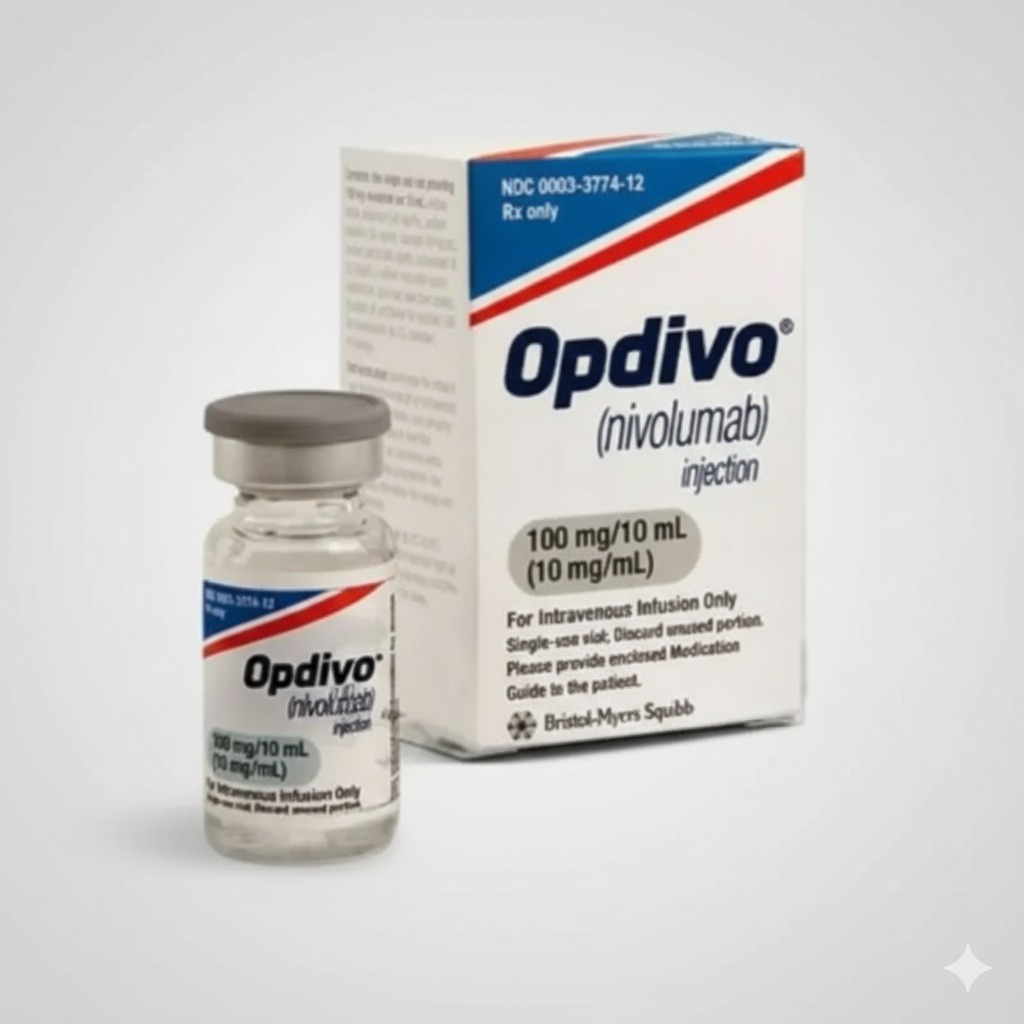
Description
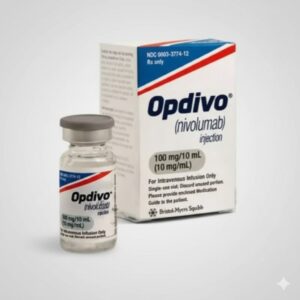
What is Opdivo?
Opdivo (generic name Nivolumab) is a breakthrough cancer medication known as an Immunotherapy. It belongs to a specific class of drugs called PD-1 Inhibitors (Programmed Death receptor-1). Unlike traditional chemotherapy that kills cells directly, Opdivo works by “unmasking” cancer cells so the body?s own immune system can find and destroy them.
Mechanism of Action
Opdivo is often described as “releasing the brakes” on the immune system. Its function involves a sophisticated molecular interaction:
-
The Deception: Cancer cells often produce a protein called PD-L1. When this protein binds to the PD-1 receptor on the body’s T-cells (immune cells), it sends a “stop” signal, telling the immune system to ignore the cancer.
-
The Blockade: Opdivo is a monoclonal antibody that binds to the PD-1 receptors on T-cells.
-
The Result: By blocking this interaction, Opdivo prevents the cancer cell from “turning off” the immune response. This allows the T-cells to recognize the cancer as a threat and begin an attack.
Pharmacological Profile
As a biologic medication (an antibody), Opdivo must be handled with precision in a clinical setting:
-
Administration: It is administered as an intravenous (IV) infusion, typically lasting 30 to 60 minutes.
-
Dosing Schedule: It is usually given every 2, 3, or 4 weeks, depending on the specific type of cancer and the treatment plan.
-
Combination Therapy: It is frequently used in combination with other immunotherapies (like Yervoy) or chemotherapy to enhance the immune response.
Clinical Application
Opdivo has been approved for a wide range of “hard-to-treat” or advanced cancers, including:
-
Melanoma: Used for advanced skin cancer that cannot be removed by surgery.
-
Non-Small Cell Lung Cancer (NSCLC): A primary treatment for advanced lung cancer, especially after other treatments have failed.
-
Renal Cell Carcinoma: Used for advanced kidney cancer.
-
Classical Hodgkin Lymphoma: For patients whose cancer has returned or spread after a stem cell transplant.
-
Head and Neck Cancers: Specifically for squamous cell carcinomas.
Safety and Monitoring
Because Opdivo activates the immune system, its side effects are often related to “inflammation.” The immune system may occasionally attack healthy organs, leading to conditions like pneumonitis (lung inflammation), colitis (intestinal inflammation), or skin rashes. Doctors monitor patients closely for any signs of an overactive immune response.







There are no reviews yet.